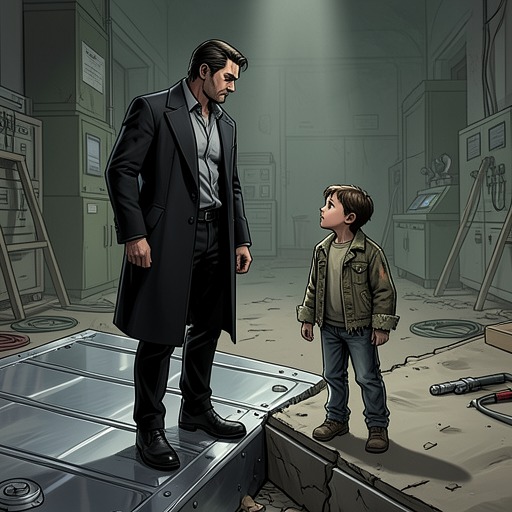
Jesse Barrett
The Vampire Prince’s BrideJesse Barrett is a dragon shifter whose personal arc turns on the difference between an imposed relationship and a freely chosen one. His decisive significance lies in the way his hidden supernatural identity becomes both a source of rupture and the basis of a new intimacy: he ends his relationship with Charlotte, reveals himself through transformation, then tells Ella that he wants her and the child they may raise together. His eventual proposal is presented not as a duty but as an act of deliberate choice.
Identity and Hidden Nature
Jesse’s supernatural identity is that of a dragon shifter. The evidence presents transformation as a guarded, consequential act rather than a casual display. When Charlotte confronts him after their breakup, he first refuses further contact and then changes into a dragon before flying away and apparently using a spell to conceal himself. The scene therefore makes his body an instrument of both revelation and escape: the transformation confirms what Charlotte and Ella are trying to document, while the concealment spell allows Jesse to withdraw from immediate confrontation.
His shifting also places him within the book’s wider pattern of hidden supernatural identities. Jesse does not simply possess a secret nature separate from his social life; the dragon form determines how others understand his relationships, what can be recorded about him, and how he manages unwanted exposure. Charlotte and Ella obtain evidence of both transformations, turning Jesse’s attempt to leave the scene into a new disclosure. His secrecy protects his autonomy in the moment, but it also creates the conditions for others to pursue proof rather than receive an explanation from him.
Breakup with Charlotte
Jesse’s relationship with Charlotte ends in direct and painful terms. When she comes to his private place after repeatedly trying to contact him, he tells her that they have broken up and that he has no reason to speak with her, then asks her to leave. Charlotte cries and tries to embrace him, but Jesse pushes her back. The exchange establishes a sharp contrast between her attempt to restore physical and emotional contact and his insistence on separation.
The breakup is not merely verbal. Jesse changes into a dragon and flies away, disappearing near the clouds. His transformation converts the private rejection into a revelation of the identity he had concealed, while his departure prevents Charlotte from receiving any further explanation. Ella and Charlotte treat the moment as evidence, recording both changes on a phone. Jesse therefore loses control over the boundary he was trying to enforce: he succeeds in leaving, but the act that gives him distance also exposes the truth of his nature.
Love, Pregnancy, and Chosen Commitment
Jesse’s later account to Ella revises the meaning of his earlier conduct. He acknowledges that he initially believed she had tried to deceive him into liking her, yet admits that he cared for her even without the magic involved. When Ella told him she was pregnant and he briefly left, he repeatedly imagined her with their baby and the life that might follow. That imagined future becomes the basis of his recognition that Ella, rather than an arrangement or enchantment, is what he wants.
His confession is direct and relational. Jesse takes Ella’s hands and tells her that he loves her, linking emotional certainty to the prospect of family. The scene changes the value at stake from suspicion to mutual commitment: the pregnancy, once associated with confusion and separation, becomes part of the future Jesse actively desires. His decision is significant because it distinguishes genuine attachment from magical influence and replaces the logic of being compelled with the language of wanting.
Proposal and Future Family
Jesse proposes to Ella after the circumstances surrounding their earlier arrangement have changed. He takes a ring box from his pocket, kneels, and asks her to marry him, explaining that he wants to spend his life with her, have a family, and grow old with her. Ella recognizes that he had proposed before because he had to, but Jesse answers that he knows he no longer has to—and that this is precisely why he is proposing now.
The proposal completes the movement begun by his confession. Marriage is no longer a remedy imposed by circumstance; it becomes a promise made because obligation has fallen away. Jesse’s language joins three temporal horizons: a shared life in the present, children and family in the future, and growing old together over time. The ring and kneeling gesture give physical form to that promise, while his explanation supplies its ethical distinction. What once looked like compliance becomes voluntary commitment.
Narrative Role and Significance
Jesse functions as a character through whom the story tests whether intimacy can survive secrets, competing claims, and pressure from circumstance. His arc combines metamorphosis with romance: the dragon form externalizes the identity he tries to hide, while the love plot asks whether his final bond is freely chosen. His flight from Charlotte is an image of avoidance and concealment; his later taking of Ella’s hands and kneeling before her reverses that movement through touch, speech, and deliberate presence.
The surrounding evidence also places Jesse in a world where bodies, relationships, and futures are repeatedly treated as objects of exchange or obligation. Against that background, his proposal matters because he explicitly separates desire from necessity. He does not claim Ella merely because pregnancy requires an arrangement; he chooses her after imagining a life with her and recognizing that the choice is his own. Jesse’s ending, as supported here, is therefore not simply a romantic reconciliation but a redefinition of commitment: the hidden dragon’s most consequential transformation is from flight to freely declared family allegiance.